Unlike outdoor-work-dependent hazards, water filtration installation timing is less season-dependent given its primarily indoor plumbing nature.
Seasonal timing advice is common for home projects that depend on weather, and it mostly does not transfer here. What replaces it is a different set of scheduling questions: when your household can lose water for a few hours, when your utility publishes the report that might change what you buy, and whether anything about your supply changes predictably through the year.
- Water filtration installation has minimal seasonal dependency given its primarily indoor nature.
- Time installation around your household’s tolerance for a brief water service interruption.
- If responding to a specific CCR finding, install promptly after your review rather than waiting for a specific season.
- This differs from more outdoor-work-dependent installation timing considerations for other home hazards.
Indoor Installation: Minimal Seasonal Dependency
Since most filtration installation (under-sink, whole-house at the main water line entry, typically in a basement or utility area) happens indoors, season has minimal practical impact on installation timing itself.
The work happens at the point where the supply line enters the house, which for most homes means a basement, crawlspace, garage or utility closet. None of those are weather dependent in the way a roof or a foundation excavation would be, so the calendar constraint that governs most home projects simply does not apply.
There are two genuine exceptions, and both concern temperature rather than season as such. Filter housings and membranes are not freeze tolerant, so an installation in an unconditioned garage or crawlspace in a cold climate needs freeze protection designed in from the start rather than added later. If that space drops below freezing, the question is not when to install but whether that location is viable at all.
The second is the drain connection. Reverse osmosis systems need somewhere to send reject water, and if the intended route runs through an unheated space it faces the same freezing risk as the supply side. Confirm both the feed and the drain path stay above freezing year round before committing to a location.
Timing Around Water Usage Patterns
Consider scheduling installation for a time when your household can tolerate a brief water service interruption (a few hours) without significant disruption, rather than a specific season.
A whole-house installation requires shutting off the main supply, which means no water anywhere in the house for the duration. That is the practical scheduling constraint, and it argues for a day when the household can absorb the interruption rather than a particular month.
Allow more time than the quoted install window. Older plumbing frequently produces surprises once the main is opened up, most commonly a main shutoff valve that no longer seals after years without being exercised. Discovering that mid-install turns a scheduled afternoon into a longer job, so it is worth testing that the main shutoff actually closes before install day.
Fill containers for drinking and cooking beforehand, and expect the first draw afterward to run cloudy or discolored as disturbed sediment clears. That is normal following work on a supply line and typically resolves after running the taps, but it is easier to plan around than to be surprised by.
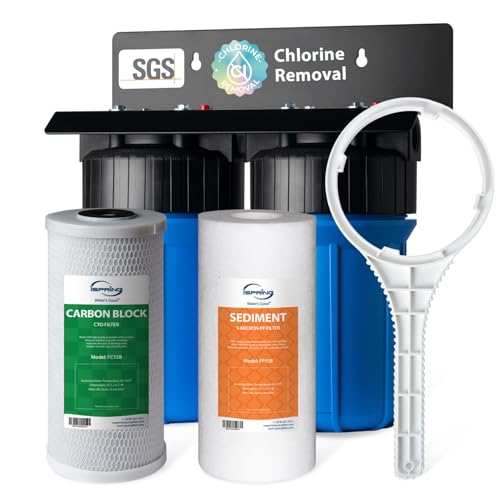
Following CCR Timing
If you’re installing filtration in response to a specific CCR finding, timing your installation shortly after reviewing your annual report keeps your response prompt relative to when you learned about the specific concern.
Community water systems are required to deliver an annual consumer confidence report to their customers, and for most systems that arrives by mid-year[1]. That schedule creates the one genuinely calendar-linked reason to time a filtration purchase, because the report is the document most likely to tell you which contaminant you should be buying certification against.
Buying before you read it risks buying the wrong technology. Activated carbon, reverse osmosis, ion exchange and ultraviolet disinfection each address different contaminant classes, and no single one covers everything. A report that identifies a specific concern converts an open-ended purchase into a specification, which is a much better position to shop from.
The report has known blind spots worth naming. It describes the water the utility delivers, not the water at your tap after it passes through your own service line and internal plumbing. Lead in particular is usually contributed by that final stretch, which is why a clean utility report does not by itself rule out lead at your kitchen faucet.
If a violation notice or a boil-water advisory arrives, that overrides the annual rhythm entirely. Those are time-sensitive by design and warrant acting on their own schedule rather than waiting for a planned project window.

FAQ
Does water filtration installation need to happen in a specific season?
No — it’s primarily indoor work with minimal seasonal dependency, unlike some other home hazard mitigation installations.
Will I be without water during installation?
Yes, for a whole-house system. The main supply has to be shut off, so the entire house loses water for the duration of the work. Plan for longer than the quoted window, since older plumbing often adds unforeseen steps once the line is opened.
Does cold weather affect a filtration system after installation?
It does if any part of the system sits in an unconditioned space. Housings and membranes are not freeze tolerant, so installations in garages or crawlspaces in cold climates need freeze protection designed in from the start.
Should I wait for my annual water report before buying?
If you are buying in response to a suspected contaminant, yes. The report tells you which technology is appropriate, and different contaminant classes require different treatment. Buying first risks selecting the wrong approach.
Why is my water discolored right after installation?
Work on a supply line disturbs sediment that has settled in the pipes, and it clears once the taps have run for a while. Persistent discoloration after that is worth raising with the installer.
Timing is more about household convenience than season for this specific type of installation.
References
- CCR Information for Consumers. U.S. Environmental Protection Agency. Accessed 23 September 2026
These statements have not been evaluated by the Food and Drug Administration. This information is not intended to diagnose, treat, cure, or prevent any disease. Content is for informational purposes only and is not medical advice; consult a qualified healthcare provider before starting any supplement. As an Amazon Associate we earn from qualifying purchases.
