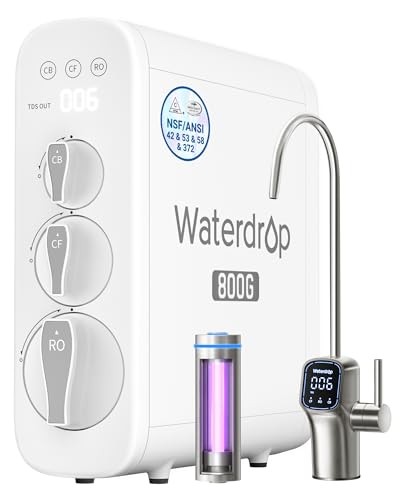
Given the cost of the whole-house reverse osmosis category, understanding the consumer-vs-professional distinction matters particularly here.
The labels are marketing terms, not certification tiers. There is no standards body that defines what makes equipment professional-grade for residential water treatment, which means the phrase can describe a genuinely heavier-duty machine or simply a more expensive one. The specifications that actually separate the two are published, though, and they are worth reading directly rather than inferring from the tier name.
- Professional-grade systems are rated for higher continuous flow rates and heavier-duty use.
- Both tiers provide reliable performance when properly NSF-certified for your specific concern.
- Consumer-grade is adequate for typical single-family household water demand.
- Professional-grade capacity matters most for larger households or unusually high water demand.
Build Quality and Capacity Differences
Professional-grade systems (sometimes used in light commercial or high-demand residential applications) are rated for higher continuous flow rates and heavier-duty use than typical consumer-grade residential systems.
The specification that matters most is rated continuous flow, usually stated in gallons per minute. A whole-house unit has to keep up with simultaneous demand: a shower running while the dishwasher fills and someone uses a hose bib. If the system’s rated flow falls below your household’s realistic peak, you get pressure drop at the fixtures, and no amount of contaminant reduction performance compensates for a weak shower.
Beyond flow, the durability differences are mostly in materials and serviceability. Heavier housings, metal rather than plastic mounting brackets, larger-diameter ports that reduce pressure loss, and stainless rather than plated fittings all show up more often at the higher tier. So does the ability to service one stage without taking the whole assembly apart, which matters more than it sounds like it should over a decade of filter changes.
Duty cycle is the other real distinction. Equipment intended for light commercial use is designed to run far more hours per day than a residential unit ever will, so its components are sized with more headroom. In a single-family home that headroom translates into a longer service life rather than better water, which is a legitimate reason to buy up but not a performance claim.
Certification Consistency
Both consumer and professional-grade systems, if properly NSF-certified for your specific contaminant concern, provide reliable reduction performance — the tier difference is more about capacity and durability than fundamental certification reliability.
This is the part that most cleanly separates marketing from substance. NSF/ANSI certification is a pass or fail test against a defined standard, and it does not come in grades. A consumer unit certified for a given contaminant reduction has demonstrated that reduction under the same protocol a professional-tier unit would face.
It helps to know which standard covers what. NSF/ANSI 42 covers aesthetic effects such as chlorine, taste and odor. NSF/ANSI 53 covers health effects, which is where lead, cysts and many volatile organic compounds live.
NSF/ANSI 58 covers reverse osmosis systems specifically. NSF/ANSI 401 covers incidental contaminants such as certain pharmaceuticals. A system can be certified under one and not the others, so the tier label tells you nothing that the certification listing does not tell you better.
Read the certification claim at the contaminant level rather than the standard level. Certified to NSF/ANSI 53 is not a general health claim; it means certified for the specific substances listed in that product’s certification, which might be cyst reduction and not lead[1]. The certifier’s public listing shows exactly which claims a given model holds[1].

When Consumer-Grade Is Adequate
For a typical single-family household, a quality consumer-grade whole-house RO system with proper NSF certification is adequate — professional-grade capacity matters most for larger households or unusually high water demand.
For most single-family homes, it is. The decisive variable is peak simultaneous demand, not the number of people in the house, so a smaller household with two full bathrooms in use at the same time can stress a system more than a larger household with staggered routines. Estimate your realistic peak, then buy a rated flow that clears it with margin rather than one that just meets it.
There are situations that genuinely justify moving up. A home on a well with high sediment or iron loading, a house with an irrigation system tied into treated supply, or a property with unusually long runs and existing pressure problems all benefit from the extra headroom. So does any installation where taking the system offline for service is particularly disruptive.
Where the upgrade rarely pays is contaminant reduction itself. If your concern is a specific compound identified in your water report, the certification for that compound is what resolves it, and a correctly certified consumer unit does that job. Paying up for capacity you will not use does not improve the water coming out of the tap.

FAQ
Do I need professional-grade equipment for a typical family home?
Not usually — a quality consumer-grade system with proper NSF certification is adequate for typical single-family household water demand.
Is professional-grade a regulated term?
No. It is a marketing description with no standardized definition for residential water treatment. Compare the published specifications, particularly rated continuous flow and certification listings, rather than relying on the tier name.
What flow rate does a typical home need?
Size to your realistic peak simultaneous demand rather than your household headcount, and leave margin above it. Two fixtures running at once is a common planning baseline, and pressure drop at the shower is the symptom you will notice first if the system is undersized.
Does a higher price mean better contaminant reduction?
Not by itself. Reduction performance is established by NSF/ANSI certification for specific contaminants, which is pass or fail. Higher price more often buys capacity, durability and features than better removal of a given compound.
Can I check a certification claim independently?
Yes. Certifying bodies publish searchable listings of certified models and the exact claims each one holds. That listing, not the product page, is the authoritative source for what a system is certified to reduce.
Match capacity to your actual household water demand rather than assuming professional-grade is universally necessary or superior.
References
- Consumer Tool for Identifying Point-of-Use and Pitcher Filters Certified to Reduce Lead in Drinking Water (PDF, EPA/600/F-24/143). U.S. Environmental Protection Agency. Accessed 23 September 2026
These statements have not been evaluated by the Food and Drug Administration. This information is not intended to diagnose, treat, cure, or prevent any disease. Content is for informational purposes only and is not medical advice; consult a qualified healthcare provider before starting any supplement. As an Amazon Associate we earn from qualifying purchases.