Some whole-house systems are marketed as DIY-installable while others are designed primarily for professional installation — understanding this distinction matters.
The distinction is real but it is not what the marketing implies. It is almost never about filtration capability, which is set by the media and the membrane rather than by who installs them. It is about connection design, weight, and how much of the surrounding plumbing work the system assumes is already in place. Reading it as a quality signal leads people to overpay for professional-grade equipment they do not need, and occasionally to underbuy for an installation their house cannot easily accept.
- Some systems are specifically designed for DIY installation with simplified connections.
- More complex systems (booster pumps, larger capacity) generally warrant professional installation.
- The underlying filtration technology is often comparable between DIY-marketed and professionally-installed systems.
- Choose based on your specific plumbing configuration complexity and installation confidence.
DIY-Installable Systems
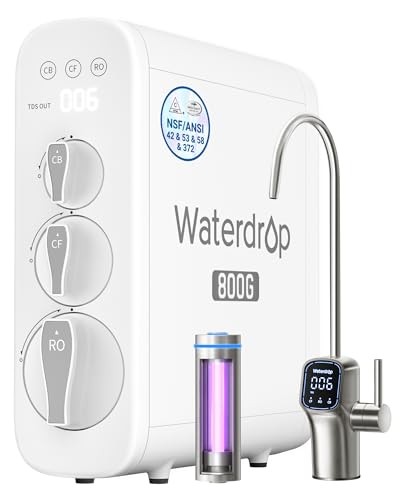
Some manufacturers specifically design systems with simplified connections marketed toward confident DIY installers, though the underlying filtration technology (RO membrane, for example) is often comparable to professionally-installed systems.
What actually differs is the interface. Do-it-yourself-oriented systems tend to arrive pre-assembled on a bracket or frame, use push-to-connect or threaded fittings rather than sweated copper, include the adapters and tubing in the box, and ship with instructions written for a homeowner. Some include a bypass arrangement rather than assuming a plumber will build one.
Those are genuine engineering choices with genuine trade-offs. Push-to-connect fittings are faster and forgiving, and they are also the most common leak point in a self-installed system if the tubing was cut at an angle or not seated fully. Pre-assembled frames save hours and constrain where the unit can physically go. None of that touches what the system removes from your water.
Professional-Grade Installation Complexity
More complex whole-house systems (particularly those requiring booster pumps, extensive plumbing modification, or larger capacity for bigger homes) are generally designed for professional installation given the complexity involved.
At this end the assumption is that a licensed plumber is doing surrounding work the box does not contain. That usually means building the bypass loop, sweating or crimping into the main, providing a drain with an air gap for backwashing equipment, and adding a dedicated outlet or circuit for a pump or ultraviolet stage. The equipment may also be heavy enough to require its own floor stand or wall support rather than hanging on the plumbing.
Two practical markers separate the categories more reliably than any marketing label. First, whether the manufacturer publishes homeowner installation instructions or refers you to a dealer network. Second, whether self-installation affects the warranty, which is stated in the warranty terms and is worth reading before purchase. Those two answers tell you which category a product is genuinely in.

When Each Makes Sense
DIY-marketed systems suit confident DIYers with straightforward plumbing configurations; professional-grade installation is warranted for complex configurations or larger, higher-capacity systems.
It is also worth checking your own house before deciding, because the building constrains this as much as the product does. Where does the main enter, and is there room around it? Is there a drain within reach, and an outlet? Is the existing supply plumbing something a contractor will happily cut into, or is it old galvanized or polybutylene that turns a filtration job into a repipe conversation? A do-it-yourself-marketed system in an awkward location can be a harder job than a professional-grade system in a good one.
A hybrid arrangement resolves most of these cases and is worth asking about explicitly. A plumber prepares the tie-in, bypass and drain; you mount the unit and connect it. You are paying for the part with the flooding risk and the permit implications, and keeping the saving on the assembly.

FAQ
Are DIY-marketed whole-house systems lower quality than professionally-installed ones?
Not necessarily in filtration technology — the difference is mainly installation complexity and connection design, not fundamental filtration capability.
Are DIY-installable systems filtering less effectively?
Not inherently. Filtration capability is set by the media and membrane, not by the connection design. Compare certified reduction claims for your documented concern, which is the measure that actually distinguishes performance between products.
How can I tell which category a system is really in?
Two checks beat any marketing claim: whether the manufacturer publishes homeowner installation instructions or refers you to a dealer network, and whether the warranty terms reduce coverage for self-installation. Both are stated in the documentation before purchase.
Can I have a professional install a DIY-marketed system?
Yes, and it is common. It also removes any warranty ambiguity. Some plumbers charge slightly less for a pre-assembled unit because the assembly work is already done.
What is the most common problem with self-installed systems?
Leaks at push-to-connect fittings, usually from tubing cut at an angle or not seated fully. Cutting square, seating firmly and running the system under pressure with a towel underneath for the first day catches nearly all of them.
Confirm your specific plumbing configuration matches a DIY-marketed system’s design assumptions before attempting self-installation.
Telling the Categories Apart Before You Buy
Marketing language is unreliable here, so use checks that are not marketing:
- Does the manufacturer publish homeowner installation instructions, or refer you to a dealer network?
- Do the warranty terms reduce or void coverage for self-installation?
- Is the unit sold pre-assembled on a bracket, or as components?
- Are adapters, tubing and fittings included, or listed separately?
- Does it require a drain connection, and does it require electrical power?
- What does it weigh with the housings full, and what is it meant to be mounted to?
A system that publishes homeowner instructions, keeps the warranty intact for self-installation, ships pre-assembled with the fittings included, and needs neither a drain nor a circuit is genuinely do-it-yourself. One that fails several of those is professional-grade whatever the listing says.
Certification Is the Question Marketing Hopes You Skip
Because installation style says nothing about performance, the question that actually decides value is certification, and it applies identically to both categories. Look for a certified reduction claim that names your documented concern: NSF/ANSI 42 for aesthetic effects such as chlorine taste and odor, NSF/ANSI 53 for health-effects claims, NSF/ANSI 58 for reverse osmosis[1].
A professional-grade system with no relevant certified claim is not better than a do-it-yourself system that carries one. If a listing emphasizes installation grade, capacity and construction while staying vague about certified reduction claims, that ordering of emphasis is itself informative.
References
- Consumer Tool for Identifying Point-of-Use and Pitcher Filters Certified to Reduce Lead in Drinking Water. U.S. Environmental Protection Agency. Accessed 17 September 2026
These statements have not been evaluated by the Food and Drug Administration. This information is not intended to diagnose, treat, cure, or prevent any disease. Content is for informational purposes only and is not medical advice; consult a qualified healthcare provider before starting any supplement. As an Amazon Associate we earn from qualifying purchases.