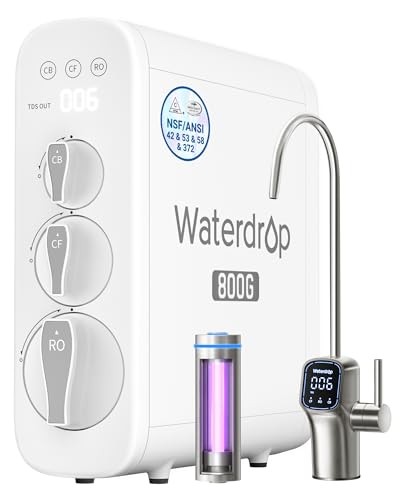
Given whole-house RO systems’ high cost, financing is a particularly relevant consideration in this specific market.
Financing decisions made in a kitchen with a contractor present are worse than the same decisions made a week earlier at a table. The single most useful thing you can do is separate the two questions: what work is being done, and how it is being paid for. Contractors who bundle them are not necessarily acting badly, but the bundle makes it hard to tell whether you are negotiating the job or the loan.
- Many water treatment companies offer financing given their systems’ high price point.
- General home improvement financing options remain relevant given the high cost involved.
- Compare financing terms carefully given the proportionally higher stakes at this price point.
- This is a market where financing consideration is particularly common and worth researching thoroughly.
Contractor Financing
Many water treatment companies offer in-house payment plans or partner financing specifically because of their systems’ high price point — ask specifically when getting quotes, and this is a more commonly offered option here than for lower-cost home services.
In most cases the contractor is introducing a third-party lender rather than lending you money, and is compensated for that introduction. The practical consequence is a price that can differ between cash and financed terms for identical work, so ask for both explicitly. If there is a gap, treat it as a finance charge and include it when comparing against an outside offer.
Deferred-interest promotions deserve particular attention because they are common in home improvement and are easy to mistake for zero percent. Under deferred interest, failing to clear the balance within the promotional window can trigger interest charged retroactively on the original amount. Ask directly which structure is on offer, and read the answer in the agreement rather than taking it verbally.
General Home Improvement Financing
A HELOC, personal loan, or promotional 0%-APR credit card are general-purpose alternatives, particularly relevant given the high cost of whole-house systems specifically.
Get one written outside offer before you take a contractor’s. A credit union personal loan quote takes little time to obtain, is frequently better than a bank’s, and gives you a concrete number to compare against rather than an impression. Having it in hand also changes the conversation, because a specific competing rate is harder to talk past than a general sense that you might shop around.
If you have equity and the filtration work is part of a larger home project, a home equity line of credit will usually carry the lowest rate, with the trade-off that your house secures it and that closing costs and setup time are real. For filtration alone it is often more machinery than the purchase warrants.

Comparing Financing Terms Carefully
Given the high price point in this specific market, carefully compare effective interest rates and terms across financing options — the stakes of a bad financing choice are proportionally higher here than for lower-cost purchases.
Compare on total dollars repaid, which requires the annual percentage rate, the term and any fees, rather than on the monthly payment. Extending a term always lowers the monthly figure and always raises the total, which is why the monthly number is the one that gets quoted first.
Two contract details are worth confirming before signing. Whether there is a prepayment penalty, since paying down early is a common intention and occasionally a penalized one. And whether the financing is contingent on this contractor doing the work, because that coupling costs you the ability to accept a better quote without restarting the finance process.

FAQ
Do most whole-house RO system companies offer financing?
Many do, given the systems’ high price point — ask specifically when getting quotes, since this is a commonly offered option in this specific market.
Should I take contractor financing or arrange my own?
Compare both on total dollars repaid rather than monthly payment. Contractor financing is sometimes genuinely competitive, but you cannot know without an outside quote, and a credit union offer takes little time to obtain.
What is the most common financing trap on purchases this size?
Deferred-interest promotions mistaken for true zero percent offers. If the balance is not cleared within the promotional window, interest can be charged retroactively on the original amount. Confirm which structure applies in the agreement itself.
Is there help available that is not a loan?
Often. Utility-funded testing programs, lead service line replacement assistance, municipal home repair programs and manufacturer rebates all exist in various places. Most run on enrollment periods, so check before committing rather than after.
Why does the cash price sometimes differ from the financed price?
Because the contractor is usually introducing a third-party lender and is compensated for it. The difference is a finance charge in substance, and it should be counted as one when comparing against an outside offer.
Compare total cost including interest carefully given the high price point typical in this market.
Check for Assistance Before You Borrow
Some of this cost may not need financing at all, and the programs are easy to miss because they are not advertised at the point of sale.
- Many utilities offer free or subsidized water testing, which at minimum saves the cost of establishing what you are dealing with.
- Lead service line replacement assistance exists in a number of jurisdictions, sometimes covering the homeowner-side portion that is otherwise your responsibility.
- State and municipal home repair or weatherization programs occasionally include plumbing work.
- Some manufacturers run rebates, particularly on softeners and higher-efficiency reverse osmosis units.
Most of these operate on enrollment periods rather than standing availability, so the checking is worth doing before committing to a financed purchase rather than after.
A Sensible Order of Operations
Working through this in sequence tends to produce a better outcome than doing it all in one conversation. Confirm the documented concern and where it came from. Take the low-cost interim steps that address the main exposure route now.
Check for assistance programs and rebates. Write the scope yourself and gather three like-for-like quotes. Obtain one outside financing offer. Only then compare a contractor’s financing against it.
Each step is short, and the order matters more than the effort. Most poor financing outcomes on purchases this size come from doing them in the reverse order, with the financing decided first and everything else fitted around it.
These statements have not been evaluated by the Food and Drug Administration. This information is not intended to diagnose, treat, cure, or prevent any disease. Content is for informational purposes only and is not medical advice; consult a qualified healthcare provider before starting any supplement. As an Amazon Associate we earn from qualifying purchases.