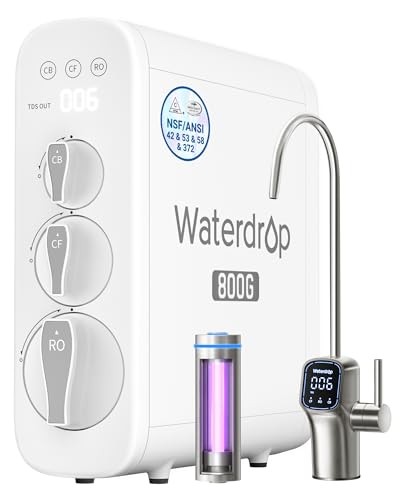
Here’s a complete line-item breakdown of what makes up a typical whole-house RO system quote.
- Assessment is often included or costs $100-$300 separately.
- The core RO unit runs $1,000-$4,000 depending on capacity and features.
- Installation labor typically runs $300-$800.
- Standard installations commonly total $1,500-$3,500; premium systems can reach $4,000-$5,000+.
Assessment
Water quality assessment (CCR review, possible additional testing): often included in the quote or $100-$300 if billed separately.
Equipment
Whole-house RO system unit: $1,000-$4,000 depending on capacity and features. Remineralization filter add-on: $100-$300. Booster pump (if needed): $150-$400.

Labor and Installation
Professional installation labor: $300-$800 depending on plumbing complexity and electrical needs.
Typical Total
Adding these components together, a standard whole-house RO installation commonly lands in the $1,500-$3,500 range, with premium/high-capacity systems reaching $4,000-$5,000+.
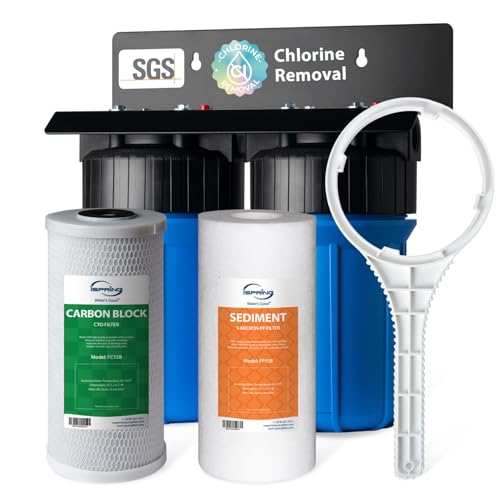
Read the Quote for What It Excludes
The line items are the visible part of a quote and the exclusions are where the variance between quotes actually lives. Permits and inspection, the drain connection, any electrical work, removal and disposal of equipment being replaced, post-installation testing, and sales tax are all commonly outside a headline figure.
Ask each installer to list exclusions explicitly rather than inferring them from silence. Two quotes that look far apart often converge once both are stated on the same basis, and occasionally the cheaper-looking one turns out to be the more expensive job. This single question does more to make quotes comparable than any other [1].
Keep One-Time and Recurring Costs in Separate Columns
Equipment and installation are a one-time outlay. Cartridges, membranes and any servicing are recurring, and they run for as long as you own the system. Adding them into a single number obscures the comparison, because a system with a lower purchase price and a shorter consumable life can be the more expensive one to own.
A two-column view is enough: what it costs to get it working, and what it costs each year to keep it working. Ask each installer for the consumable schedule and the part numbers so the recurring column is populated from the manufacturer’s own specification rather than from an estimate.
Stage the Payments Against the Line Items
Once a quote is itemized, the payment schedule can follow the same structure instead of being a single figure handed over up front. A deposit at order, a payment when the equipment is delivered and installed, and a final balance after the installation has been verified is a common shape, and it keeps some of your money attached to the parts of the job that have not happened yet.
Ask for the schedule in writing alongside the quote, and ask what triggers each stage. If post-installation testing is part of the scope, tying the final payment to that step rather than to the equipment being physically present is the arrangement that most closely matches what you were actually buying. Local practice and any state limits on deposits vary, so treat this as a negotiation point rather than a fixed rule.
Why the Same System Prices Differently in Two Homes
Identical equipment can carry meaningfully different installed costs depending on the house. Plumbing configuration and where the supply enters, distance from the install location to a suitable drain, physical access, incoming water pressure, whether a pump is required, and local labor rates all move the labor side of the quote independently of the hardware.
This is why a national average is a weak basis for a household budget and why a quote produced without anyone seeing the space deserves some skepticism. The itemized breakdown above tells you which components exist; a site visit is what tells you what they cost in your particular house.
FAQ
What’s typically included in a base whole-house RO system quote?
Most quotes include the unit, standard installation labor, and often initial assessment — confirm exactly what’s included, particularly for add-ons like remineralization or booster pumps.
Why is my quote higher than typical ranges I have seen online?
Usually because of the installation rather than the equipment. Access, distance to a drain, pressure management, added electrical work and local labor rates all vary by property and region. Ask the installer to point to the specific line items driving the difference, which is a fair question and one a good installer can answer readily.
Should I compare systems on purchase price or total cost of ownership?
Total cost of ownership, since consumables run for the life of the system. Ask for the replacement schedule and part numbers for each option so the recurring side is built from the manufacturer’s specification, then compare the two columns together rather than the purchase price alone.
What is usually excluded from a whole-house system quote?
Permits and inspection, drain connections, electrical work, disposal of old equipment, post-installation testing and tax are the usual suspects, though practice varies by installer. Rather than guessing, ask for exclusions to be stated in writing on every quote you collect.
This breakdown reflects general ranges — get an itemized quote from your specific installer for exact local pricing.
References
- How To Avoid a Home Improvement Scam. U.S. Federal Trade Commission
These statements have not been evaluated by the Food and Drug Administration. This information is not intended to diagnose, treat, cure, or prevent any disease. Content is for informational purposes only and is not medical advice; consult a qualified healthcare provider before starting any supplement. As an Amazon Associate we earn from qualifying purchases.