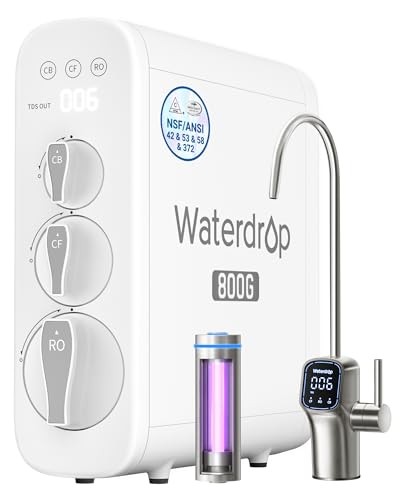
Municipal water systems meet federal safety standards, yet many homeowners notice taste, odor, or occasional reports of trace contaminants that make them wonder if additional treatment is a smart financial move. This guide walks through the typical contaminants that can remain after treatment, the most common home‑scale treatment technologies, and the real‑world costs of doing it yourself versus hiring a licensed plumber or water‑treatment specialist.
Because research on long‑term health impacts of low‑level tap‑water contaminants is still evolving, the analysis below focuses on measurable factors — equipment price, installation labor, filter replacement schedules, appliance longevity, and potential resale value — rather than promising any specific health outcome. Use this information to decide whether a treatment system fits your budget, household needs, and risk tolerance.
- Review your annual water quality report before buying any treatment equipment.
- Point‑of‑use carbon filters are inexpensive and handle taste/odor; RO adds broad contaminant reduction at higher upfront and ongoing cost.
- Whole‑house softeners pay back through appliance longevity in hard‑water areas, but they don’t remove most chemical contaminants.
- Professional installation is recommended for any system that connects to the main supply line or requires permitting.
- Budget for regular filter and membrane replacements; neglecting maintenance erodes both performance and value.
What Contaminants May Remain in Municipal Tap Water
Even when a utility complies with the Safe Drinking Water Act, trace amounts of disinfection by‑products (such as trihalomethanes), lead from aging service lines, nitrates from agricultural runoff, and emerging contaminants like PFAS can be present at low concentrations. These substances are typically measured in parts per billion or parts per trillion, well below regulatory limits, but they can affect taste, odor, and consumer confidence.
Water quality reports (Consumer Confidence Reports) issued annually by your utility list detected contaminants and their levels. Reviewing that report is the first, no‑cost step to understand what you’re actually dealing with before spending money on treatment.
Common Home‑Scale Treatment Technologies
Activated carbon block filters (pitcher, faucet‑mount, or under‑sink) are effective at reducing chlorine taste, many volatile organic compounds, and some disinfection by‑products. They do not remove dissolved minerals, nitrates, or most heavy metals unless combined with other media.
Reverse osmosis (RO) systems force water through a semi‑permeable membrane, removing a broad spectrum of dissolved solids, lead, nitrates, fluoride, and many PFAS compounds. RO units typically waste 3‑4 gallons of water for every gallon produced and require a dedicated storage tank and periodic membrane replacement.
Ion‑exchange softeners target hardness minerals (calcium, magnesium) and can be paired with a carbon pre‑filter for taste improvement. They do not address most chemical contaminants unless a specific resin is used. Whole‑house sediment filters protect downstream equipment but have minimal impact on dissolved chemicals.
DIY Installation vs. Professional Installation: Cost Ranges
A basic faucet‑mount carbon filter costs $20‑$40 and can be installed in minutes with no tools. Under‑sink carbon block systems range from $80‑$250 for the unit plus $30‑$80 for DIY plumbing fittings; most handy homeowners complete the job in under two hours.
Point‑of‑use RO kits start around $150‑$300 for the unit, plus $50‑$150 for tubing, fittings, and a storage tank. DIY installation is feasible for those comfortable with basic plumbing, but the need to drill a drain line and connect to a cold‑water supply adds complexity. Professional installation typically adds $200‑$500 in labor, bringing total cost to $400‑$950.


Whole‑house systems (carbon, sediment, or softener) run $100‑$2,500 for equipment. Professional installation is strongly recommended because it involves cutting into the main supply line, pressure testing, and sometimes permitting. Expect $800‑$2,000 in labor, for a total of $900‑$4,500.
Evaluating the Cost‑Benefit Balance
Health‑related benefits are difficult to quantify in dollars because most regulated contaminants are already below levels linked to acute illness[1]. However, reducing lead exposure — especially in homes with children or pregnant occupants — can be valued by avoided medical costs and developmental risk, which many public‑health agencies estimate in the thousands of dollars per avoided case[3].
Appliance protection is a more tangible return. Hard water scale shortens the life of water heaters, dishwashers, and coffee makers by 30‑50 %. A whole‑house softener costing $2,000 installed can save $300‑$600 per year in reduced energy use and delayed replacement, paying back in 3‑5 years.
Resale appeal varies by market. In regions where buyers expect a water‑treatment system, a documented, well‑maintained RO or softener can add $1,000‑$3,000 to perceived home value. In other areas the return is negligible. Treat the resale factor as a possible bonus, not a guaranteed profit.
Ongoing Maintenance and Replacement Costs
Carbon cartridges typically need replacement every 6‑12 months ($15‑$40 each). RO pre‑filters and post‑filters follow a similar schedule, while the membrane lasts 2‑3 years ($80‑$150). Budget $100‑$250 annually for a point‑of‑use RO system.
Whole‑house softeners require salt (or potassium) replenishment — roughly $5‑$10 per 40‑lb bag, used every 4‑6 weeks — plus resin bed cleaning or replacement every 10‑15 years ($300‑$600). Sediment filters are cheap ($10‑$20) but should be changed quarterly.
Neglecting maintenance reduces contaminant removal efficiency and can cause bacterial growth in filter housings. Set calendar reminders or subscribe to a filter‑delivery service to stay on schedule.
Decision Framework: When to Test, When to Treat
Start with your utility’s Consumer Confidence Report. If it shows only chlorine taste issues, a simple carbon filter is usually sufficient and low‑cost. If lead, nitrates, or PFAS are detected near or above the EPA’s health advisory levels, consider a certified RO system or a professional whole‑house solution.

For homes built before 1986 with known lead service lines, a certified lead‑reduction filter (NSF/ANSI 53) at the kitchen tap is a prudent first step[2]. Follow up with a certified lab test (cost $30‑$100) to verify reduction performance.
If you experience scaling on fixtures, reduced water heater efficiency, or soap that won’t lather, a water‑softener evaluation makes financial sense. Request a hardness test (often free from the utility or $15‑$30 from a lab) before purchasing.

FAQ
Do I need a whole‑house system if only my kitchen tap tastes bad?
Probably not. A faucet‑mount or under‑sink carbon filter addresses taste and odor at a fraction of the cost and complexity of a whole‑house unit.
Can a reverse osmosis system remove PFAS?
Many RO units certified to NSF/ANSI 58 reduce PFAS compounds, but performance varies by membrane and water chemistry. Verify the product’s certification sheet for the specific PFAS you’re concerned about.
How often should I test my water after installing a treatment system?
Test at installation to establish a baseline, then annually or whenever you notice a change in taste, odor, or pressure. Certified labs charge $30‑$100 per sample.
Is it worth hiring a plumber for an under‑sink RO install?
If you’re comfortable with basic plumbing (cutting copper or PEX, making compression fittings), DIY saves $200‑$500. Otherwise, a licensed plumber ensures code‑compliant connections and leak‑free operation.
Will a water softener increase my sodium intake?
Standard ion‑exchange softeners add a small amount of sodium (roughly 8‑12 mg per 8‑oz glass for very hard water). If you’re on a sodium‑restricted diet, consider a potassium‑based regenerant or a point‑of‑use RO for drinking water.
This article provides general cost and performance information; it does not replace a certified water test or professional assessment. For health‑related concerns — especially lead, nitrate, or PFAS exposure — consult a qualified water‑quality professional or your local health department before relying solely on a home treatment device.
References
- National Primary Drinking Water Regulations. U.S. Environmental Protection Agency. Accessed 17 September 2026
- Consumer Tool for Identifying Point-of-Use and Pitcher Filters Certified to Reduce Lead in Drinking Water. U.S. Environmental Protection Agency. Accessed 17 September 2026
- Basic Information about Lead in Drinking Water. U.S. Environmental Protection Agency. Accessed 17 September 2026
These statements have not been evaluated by the Food and Drug Administration. This information is not intended to diagnose, treat, cure, or prevent any disease. Content is for informational purposes only and is not medical advice; consult a qualified healthcare provider before starting any supplement. As an Amazon Associate we earn from qualifying purchases.