Municipal tap water is treated to meet federal standards, yet a range of legacy and emerging contaminants can still be present at low levels. Understanding what these substances are helps homeowners make informed decisions about testing and treatment.
This guide walks through the most common contaminant categories, summarizes relevant health research, outlines practical home‑treatment options, and explains when professional testing or remediation is the safest choice.
- Municipal treatment reduces but does not eliminate all contaminants; legacy and emerging pollutants can remain at trace levels.
- Health research links several water‑borne substances to neurological, endocrine, and renal effects, though evidence varies by contaminant and population.
- Certified point‑of‑use or whole‑house filters (NSF/ANSI 53, 58, 401) are the most reliable DIY option for reducing many common contaminants.
- Regular filter maintenance and periodic lab testing are essential to verify that treatment remains effective.
- When contaminants exceed health‑based guidelines or plumbing materials are suspect, consult a licensed water‑quality professional.
What Are Municipal Tap Water Contaminants?
Municipal water systems draw from surface water or groundwater and apply processes such as coagulation, filtration, and disinfection. Even with treatment, trace amounts of naturally occurring substances (e.g., arsenic, uranium) and human‑made chemicals (e.g., pesticides, industrial solvents) can remain. A recent exposure‑risk profiling of U.S. drinking water identified seven legacy and emerging contaminants that frequently appear in finished water [1].
Organic micropollutants — a broad class that includes pharmaceuticals, personal‑care products, and pesticide metabolites — have been documented in drinking‑water supplies since the 1980s and continue to be detected at nanogram‑per‑liter levels [2]. These compounds are not routinely regulated, so their presence depends on source‑water quality and treatment capabilities.
Common Legacy Contaminants and Their Sources
Legacy contaminants such as lead, arsenic, nitrate, and disinfection by‑products have long been the focus of regulation. Lead can leach from service lines and plumbing fixtures, while arsenic occurs naturally in certain aquifers and has been linked to neurological impairment in epidemiological studies [3]. Chronic arsenic exposure, historically documented from coal‑burning in China, underscores the toxicity of inorganic arsenic even at low concentrations [4].
Nitrate, primarily from agricultural runoff, can exceed the EPA maximum contaminant level in some rural systems. Disinfection by‑products form when chlorine reacts with organic matter; they are regulated but still appear in finished water. The exposure‑risk profile for U.S. drinking water highlights these legacy agents as persistent concerns across many utilities [1].

Emerging Contaminants: PFAS, Pharmaceuticals, Microplastics, and Microfibres
Per‑ and polyfluoroalkyl substances (PFAS), a group of synthetic chemicals used in firefighting foam and consumer products, are increasingly detected in municipal supplies and are a focus of the emerging‑contaminant risk assessment [1]. Pharmaceuticals and personal‑care products enter waterways through wastewater effluent and are not fully removed by conventional treatment, contributing to the organic micropollutant load [2].
Microplastics and microfibres — tiny plastic fragments shed from textiles and other sources — have been identified as an emerging contaminant with potential ecological and human‑health implications [5]. While research on human health effects is still developing, their widespread presence in treated water warrants attention for homeowners who want to reduce exposure.

Health Research Highlights
Studies linking water quality to brain function suggest that chronic low‑level exposure to certain metals and organic compounds may affect cognitive performance, though results vary by population and exposure magnitude [6]. Arsenic’s neurotoxic potential is supported by multiple reviews, indicating that even concentrations below current regulatory limits could pose risk over long periods [3].
Endocrine‑disrupting chemicals, sometimes termed “obesogens,” have been associated with metabolic disturbances in experimental models and some human epidemiology, highlighting a possible role for water‑borne pollutants in weight‑related health outcomes [7]. Aluminum exposure from water has been reviewed for its potential links to neurodegenerative disease, but evidence remains mixed and largely based on ecological studies [8].
Uranium in drinking water, particularly in certain western U.S. communities, has been associated with kidney toxicity and other health effects; the research emphasizes the importance of local geology and the need for targeted monitoring [9]. Across these findings, study designs differ, many are observational, and regional factors heavily influence risk, so conclusions should be interpreted cautiously.

Home Treatment Options and Practical Steps
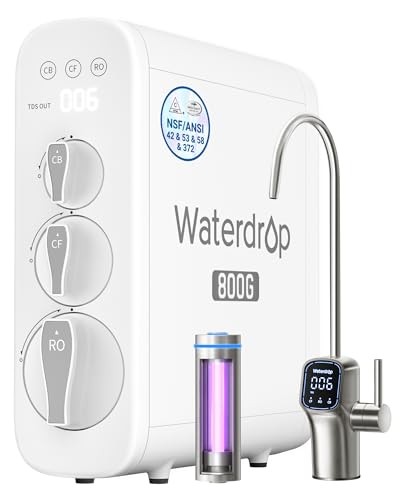
Point‑of‑use (POU) devices such as activated‑carbon filters, reverse‑osmosis (RO) units, and ion‑exchange cartridges can reduce many organic micropollutants, PFAS, lead, and arsenic. Look for products certified to NSF/ANSI standards — 53 for health‑effect contaminants, 58 for RO, and 401 for emerging compounds such as pharmaceuticals and pesticides — to verify performance claims. A PFAS reduction claim is certified under 53 and 58, not 401, so confirm PFAS is listed by name in the product’s own certification.
Whole‑house (point‑of‑entry) systems treat all water entering the home and are useful when multiple contaminants are present or when plumbing materials (e.g., lead service lines) contribute to exposure. Typical costs range from $300–$1,200 for a quality carbon block system to $1,500–$4,000 for a residential RO system, not including installation and periodic filter replacement.
Maintenance is critical: carbon filters generally need replacement every 6–12 months, RO membranes every 2–3 years, and pre‑filters more frequently in high‑sediment water. Keep a log of filter changes and test treated water periodically to confirm the system is performing as expected.
Testing Your Water and When to Call a Professional
Home test kits can screen for lead, nitrate, chlorine, and hardness, but they typically lack the sensitivity to detect PFAS, many pharmaceuticals, or low‑level arsenic. For a comprehensive picture, send a sample to a certified laboratory that analyzes the full suite of regulated and unregulated contaminants.
Consider hiring a licensed water‑quality professional or a certified environmental consultant when: (1) your home has a known lead service line or older plumbing; (2) lab results show arsenic, uranium, or PFAS above health‑based guidelines; (3) you plan a whole‑house treatment system and need design assistance; or (4) local health departments issue a drinking‑water advisory. Professional assessment ensures proper sampling, interpretation, and remediation planning.

FAQ
What are the most common contaminants found in municipal tap water?
Typical legacy contaminants include lead, arsenic, nitrate, and disinfection by‑products, while emerging concerns cover PFAS, pharmaceuticals, and microplastics. A national exposure‑risk profile identified seven key legacy and emerging agents in U.S. finished water [1].
Can a simple carbon pitcher filter remove PFAS?
Standard pitcher filters using only activated carbon are generally not certified for PFAS removal. Look for filters certified to NSF/ANSI 53 or 58 with PFAS listed by name in the certification, which often require more advanced media or reverse‑osmosis.
Is arsenic in tap water a health risk at levels below the EPA limit?
Research indicates that chronic low‑level arsenic exposure may still affect neurological function, suggesting that even concentrations under the current maximum contaminant level could pose long‑term risk [3].
How often should I replace my home water‑filter cartridges?
Carbon block cartridges typically need replacement every 6–12 months; RO membranes every 2–3 years; sediment pre‑filters more often in high‑turbidity water. Follow the manufacturer’s schedule and test treated water periodically.
When should I hire a professional to test my water?
Professional testing is advisable if you have a lead service line, detect arsenic, uranium, or PFAS above health‑based guidelines, or need design help for a whole‑house system. A licensed consultant can ensure accurate sampling and proper interpretation.
This article provides general educational information and does not constitute medical or legal advice. For specific health concerns or regulatory compliance, consult a qualified healthcare provider or a licensed water‑quality professional.
References
- US drinking water quality: exposure risk profiles for seven legacy and emerging contaminants. Journal of exposure science & environmental epidemiology, 2024
- Organic micropollutants in drinking water: an overview. The Science of the total environment, 1985
- Arsenic exposure with reference to neurological impairment: an overview. Reviews on environmental health, 2019
- Chronic arsenic poisoning from burning high-arsenic-containing coal in Guizhou, China. Environmental health perspectives, 2002
- Microfibre pollution: An emerging contaminant, alarming threat to the global environment. Journal of environmental management, 2024
- Water Quality and Brain Function. International journal of environmental research and public health, 2017
- Endocrine Aspects of Environmental “Obesogen” Pollutants. International journal of environmental research and public health, 2016
- Overview of the Relationship Between Aluminum Exposure and Health of Human Being. Advances in experimental medicine and biology, 2018
- Uranium Exposure in American Indian Communities: Health, Policy, and the Way Forward. Environmental health perspectives, 2021
These statements have not been evaluated by the Food and Drug Administration. This information is not intended to diagnose, treat, cure, or prevent any disease. Content is for informational purposes only and is not medical advice; consult a qualified healthcare provider before starting any supplement. As an Amazon Associate we earn from qualifying purchases.