Municipal water quality reports and filtration products use specific terminology worth understanding. This glossary covers the terms you’re most likely to encounter.
- CCR is your utility’s required annual water quality report; MCL is the enforceable contaminant limit.
- Disinfection byproducts form when disinfectants react with organic matter, a regulated contaminant category.
- Lead service lines are a distinct risk category from internal home plumbing.
- NSF/ANSI 53 covers health-related contaminant reduction; NSF/ANSI 42 covers aesthetic factors — an important filter-selection distinction.
Regulatory Report Terms
CCR (Consumer Confidence Report): the annual water quality report utilities are required to provide to customers, detailing detected contaminants and compliance status[1]. MCL (Maximum Contaminant Level): the enforceable legal limit for a specific contaminant in public water systems.
Treatment and Contaminant Terms
Disinfection byproducts (DBPs): compounds formed when disinfectants (chlorine, chloramine) react with organic matter in source water, regulated as their own contaminant category[2]. Lead service line: the pipe connecting a home to the municipal water main, a specific documented lead risk category distinct from internal home plumbing.
Filtration Certification Terms
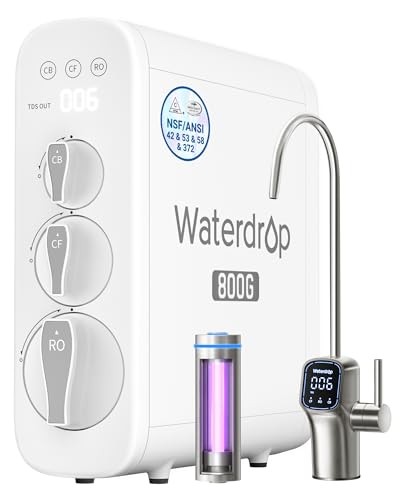
NSF/ANSI Standard 53: certification for filters reducing specific health-related contaminants. NSF/ANSI Standard 42: certification for filters addressing aesthetic factors (taste, odor, chlorine) rather than health-relevant contaminants — an important distinction when choosing a filter for your specific concern.

Detection and Reporting Terms
MCLG (Maximum Contaminant Level Goal): the level at which no known or anticipated health effect is expected, set as a health goal rather than an enforceable limit. MCL: the enforceable standard, set as close to the goal as feasible given available treatment technology and analytical methods. Seeing the two side by side on a CCR and noticing they differ is normal rather than a red flag[3].
ND or non-detect: the analysis did not find the substance above the laboratory’s reporting limit, which is not the same statement as zero. Action level: a threshold that, when exceeded in a set share of sampled homes, triggers required steps by the utility rather than an automatic violation. Lead and copper are handled this way because their levels depend heavily on plumbing, so the rule targets treatment and corrosion control rather than a single number at the plant[4].
Treatment Process Terms
Coagulation and flocculation: adding agents that cause fine suspended particles to clump so they can be settled out. Sedimentation and filtration: removing those clumps and remaining particulates. Disinfection: inactivating microorganisms, commonly with chlorine or chloramine. Chloramine is chlorine combined with ammonia, chosen in some systems because it persists further through the distribution network than free chlorine does[5].
Corrosion control: adjusting water chemistry, often with an added phosphate compound, so that the water is less likely to dissolve metal from pipes and fixtures on its way to you. This term is worth knowing because it is the mechanism connecting the utility’s treatment decisions to the lead question in your own home, which is otherwise easy to read as two unrelated topics.
Filter Hardware Terms
Point-of-use: treats water at a single fixture, typically a kitchen faucet. Point-of-entry, also called whole-house: treats water where the supply enters the building. Activated carbon: a widely used medium available as granular or as a solid block, with block generally offering more contact time. Reverse osmosis: forces water through a semipermeable membrane. Ion exchange: swaps dissolved ions for others held on a resin, the mechanism behind conventional water softening.
Micron rating: the particle size a filter is designed to capture, where a smaller number means a finer filter, not automatically a better one for your concern. Rated capacity: the volume the manufacturer certifies the cartridge to treat before replacement. Rated capacity is the number that should drive your replacement schedule, because a filter used past it can stop performing as certified.
FAQ
What’s the difference between NSF/ANSI 53 and 42 certification on a water filter?
Standard 53 certifies reduction of specific health-related contaminants; Standard 42 certifies aesthetic improvement (taste, odor, chlorine) — check which standard matches your actual concern before buying a filter.
What does non-detect mean on my CCR?
It means the laboratory did not measure the substance above its reporting limit using the required method. That is a meaningful result, but it is a statement about the limit of the measurement rather than a guarantee of absolute absence. Where a report lists the reporting limit alongside the result, that number tells you how sensitive the test was.
What is the difference between an action level and an MCL?
An MCL is an enforceable ceiling on a contaminant in the water the system delivers. An action level is a trigger: exceeding it in the required share of sampled homes obliges the utility to take specified steps, such as additional corrosion control, public education or service line work. The action-level approach is used where the result depends heavily on individual plumbing.
Is point-of-use or point-of-entry filtration the right choice?
It depends on where the concern arises and what you want treated. A concern that matters mainly for drinking and cooking can often be handled at one fixture, which is simpler and cheaper to maintain. A concern that affects all water use in the building points toward point-of-entry. Matching that to your documented finding is the decision, not the price difference.
This glossary is for general orientation — refer to your specific CCR or filter product documentation for terms not covered here.
References
- CCR Information for Consumers. U.S. Environmental Protection Agency. Accessed 14 September 2026
- Stage 1 and Stage 2 Disinfectants and Disinfection Byproducts Rules. U.S. Environmental Protection Agency. Accessed 14 September 2026
- National Primary Drinking Water Regulations. U.S. Environmental Protection Agency. Accessed 14 September 2026
- Lead and Copper Rule. U.S. Environmental Protection Agency. Accessed 14 September 2026
- Chloramines in Drinking Water. U.S. Environmental Protection Agency. Accessed 14 September 2026
These statements have not been evaluated by the Food and Drug Administration. This information is not intended to diagnose, treat, cure, or prevent any disease. Content is for informational purposes only and is not medical advice; consult a qualified healthcare provider before starting any supplement. As an Amazon Associate we earn from qualifying purchases.