New construction involves a different set of municipal water quality considerations than for other hazards, given the source water is utility-controlled.
- Confirm modern, lead-free plumbing material choices with your builder as reasonable due diligence.
- Source water quality is utility-determined, not a builder decision — review the CCR regardless of new construction status.
- Consider requesting built-in filtration plumbing infrastructure for easier future system installation.
- This differs from hazards where new construction offers inherent risk reduction through building features alone.
Plumbing Material Choices
Ask your builder about specific plumbing material choices (copper, PEX, or other current code-compliant options) — modern construction should use lead-free materials by current code, but confirming specific choices is reasonable due diligence[1].
Why Source Water Quality Isn’t a Builder Decision
Unlike radon-resistant construction features, your municipal source water quality is entirely determined by the utility serving the area, not something a builder can influence — new construction buyers should still review the utility’s CCR regardless of the home’s construction being new.
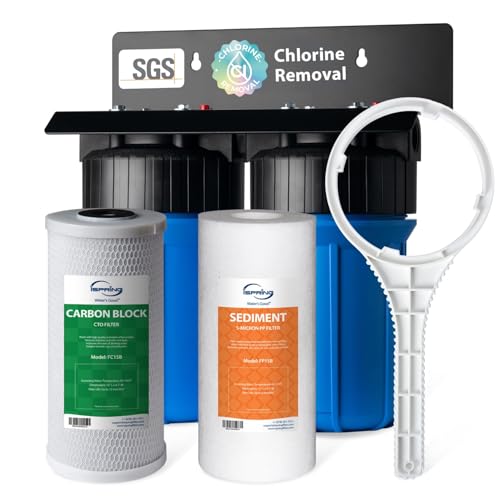
Considering Built-In Filtration
If you have specific documented concerns about your area’s municipal water (from CCR review), consider requesting built-in filtration plumbing (a dedicated line for a future under-sink or whole-house system) during construction for easier future installation.

The Window While the Walls Are Open
Almost everything that is cheap to arrange during construction becomes expensive afterwards, and the difference is access. A dedicated cold water line run to a future under-sink location, a shutoff and a drain provision where whole-house equipment would sit, and an outlet within reach of where a pump might go are all trivial while the framing is exposed.
None of that commits you to buying equipment. It commits the builder to leaving the option open, which is the cheapest form of insurance available at this stage. Raise it while the plumbing rough-in is still being planned rather than at walkthrough, because the decision belongs to the rough-in and not to the finish.
Ask for the Documentation, Not Just the Assurance
New construction generates paperwork that is genuinely useful later and genuinely hard to reconstruct: the plumbing materials actually used, the manufacturer documentation for fixtures, and the inspection sign-offs. Asking for those at handover costs nothing and gives you a record of what is behind the walls.
That record is what turns a future question into a lookup. When a concern about a specific material comes up years later, the household with the submittals answers it in minutes, and the household relying on a verbal assurance from a builder who has moved on cannot answer it at all.
Flush and Sample After the System Has Been Used
A newly plumbed house has water sitting in pipework that was recently cut, soldered or glued, and construction debris in a line is a normal thing to clear rather than a defect. A thorough flush of every fixture before occupancy is a reasonable first step, and your builder or plumber can advise what is appropriate for the materials used.
Any baseline sample is more representative once the house has been lived in for a while and the plumbing has settled into normal use. Testing on the day of handover measures a system nobody has used yet, which is not the condition you will be drinking from.
FAQ
Does new construction guarantee good water quality?
It guarantees modern, lead-free internal plumbing by current code, but source water quality depends entirely on your utility — review the local CCR regardless of construction date.
Is it worth asking for filtration rough-in if I do not plan to buy a system?
The rough-in is the inexpensive part and the retrofit is the expensive one, so it is often worth it purely to keep the option open. Ask what it adds to the quote and decide from that number rather than from a general rule.
Should I test the water in a brand new home?
Reviewing the utility’s report is worthwhile regardless of construction date, because source water quality is not something a builder influences. A tap sample is more informative once the house has been in normal use for a while than on handover day.
What documentation should I ask the builder to hand over?
The plumbing materials used, the manufacturer documentation for fixtures and any installed equipment, and the plumbing inspection sign-offs. Store them with the closing paperwork, since the value of the record is entirely in being able to find it years later.
Confirm specific plumbing material choices with your builder rather than assuming code compliance covers every consideration.
References
- Use of Lead Free Pipes, Fittings, Fixtures, Solder, and Flux for Drinking Water. U.S. Environmental Protection Agency. Accessed 1 October 2026
These statements have not been evaluated by the Food and Drug Administration. This information is not intended to diagnose, treat, cure, or prevent any disease. Content is for informational purposes only and is not medical advice; consult a qualified healthcare provider before starting any supplement. As an Amazon Associate we earn from qualifying purchases.
