Your home’s specific plumbing configuration affects which filtration approach is most practical.
- Point-of-use filtration is the practical option for apartments and rentals.
- Basement main-line access simplifies whole-house system installation.
- Homes without easy main-line access may need creative placement in a utility closet, garage, or crawlspace.
- Plumbing configuration affects both installation difficulty and system placement options.
Apartments and Rentals
Point-of-use filtration (pitcher, faucet-mounted, non-permanent under-sink units) is generally the practical option given limited ability to modify main-line plumbing in a rental.
Houses With Basement Main-Line Access
A basement with accessible main water line plumbing is the most straightforward configuration for whole-house system installation, similar to the pattern covered for well water treatment systems.
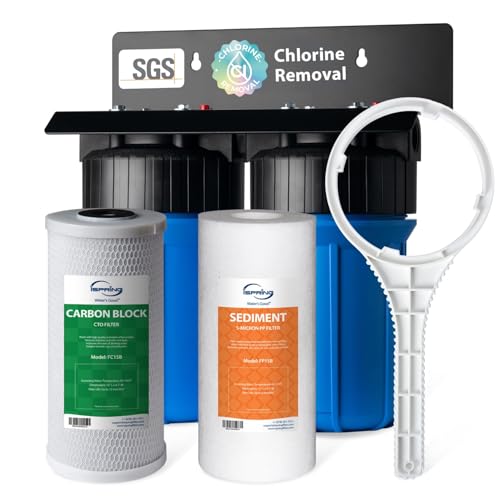
Homes Without Easy Main-Line Access
Slab-on-grade homes or those without a basement may need main-line access through a utility closet, garage, or crawlspace, potentially requiring more planning or professional consultation for whole-house system placement.

Renting: Reversibility Is the Constraint That Decides
In a rental the practical question is usually not which system performs best but which one can be removed at the end of the tenancy without leaving a trace. Anything that clamps, screws onto an existing aerator, or sits on a counter generally satisfies that test. Anything that cuts into supply lines or requires a permanent drain connection generally does not.
Where a permanent option genuinely is the right answer, the conversation belongs with the landlord or property manager before anything is bought, and the terms of your own lease govern what is permitted. Some owners will agree to an installation that stays with the property; that is an agreement worth having in writing rather than an assumption worth acting on.
Shared Plumbing in Condominiums and Multi-Family Buildings
In a building with shared risers, the water arriving at your unit has passed through pipework that is often common property rather than yours. That changes who can act: a whole-unit treatment approach may require association approval, and a building-wide concern is a building-wide matter rather than one an individual owner can resolve at their own fixture.
It also changes what your own test result means. A sample drawn at your tap reflects the shared line as well as the plumbing inside your unit, so a result worth acting on is worth raising with the association or building management as well. Point-of-use treatment remains available to you in the meantime and does not depend on anyone else’s decision.
Multi-Story Homes and the Fixture You Actually Treat
Point-of-use treatment protects one fixture. In a house where drinking and cooking happen on more than one floor, that means deciding which taps matter rather than assuming the kitchen covers the household. A bathroom tap used for filling glasses at night is a real consumption point even though nobody thinks of it as one.
Whole-house treatment avoids that decision but introduces a different one, because the equipment has to sit somewhere with main line access, drainage where the design needs it, and enough clearance to change cartridges without dismantling anything. Checking the service clearance before purchase is easier than discovering it afterwards.
FAQ
What if my home doesn’t have a basement for whole-house filtration installation?
Look for main-line access in a utility closet, garage, or crawlspace — consult a plumber for placement guidance if your configuration doesn’t have an obvious installation location.
My landlord will not allow any plumbing modification. What is left?
Pitcher and countertop units require no modification at all, and faucet-mounted units attach to the existing aerator and come off without a trace. Those cover drinking and cooking water, which is where most documented concerns on treated municipal supply actually apply.
Can I install a whole-house system in a condominium?
That depends on where your unit’s plumbing becomes common property and on your association’s rules, so it is a question for the association and a plumber rather than one with a general answer. In many buildings the accessible pipework begins inside the unit, which limits what a whole-unit approach can reach.
Does a whole-house system remove the need for a filter at the kitchen tap?
Not necessarily. Whole-house and point-of-use equipment are often certified against different contaminants, and many households run both deliberately, with the whole-house stage handling sediment and taste and a point-of-use stage handling the specific concern documented at the tap.
Consult a plumber for placement guidance if your home’s configuration doesn’t have an obvious main-line access point.
These statements have not been evaluated by the Food and Drug Administration. This information is not intended to diagnose, treat, cure, or prevent any disease. Content is for informational purposes only and is not medical advice; consult a qualified healthcare provider before starting any supplement. As an Amazon Associate we earn from qualifying purchases.
