Water quality monitoring and treatment technology has evolved significantly, particularly around lead detection and RO efficiency.
- Smart consumer monitors provide continuous, app-connected water quality tracking.
- Newer RO membrane technology improves water efficiency compared to older systems.
- Utilities increasingly use advanced detection methods for lead service line identification.
- These improvements benefit both individual homeowners and utility-level infrastructure programs.
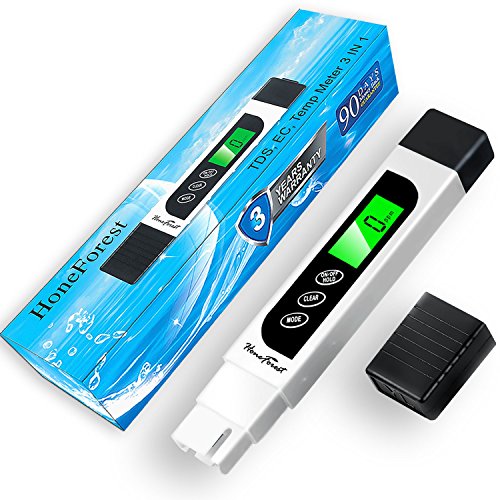
Smart Water Quality Monitors for Home Use
Newer consumer water quality monitors can track multiple parameters continuously (TDS, pH, sometimes specific contaminant indicators), connecting to smartphone apps for ongoing awareness beyond periodic testing alone.
Improved RO Membrane Efficiency
Newer RO membrane technology has improved water efficiency (reducing the reject-water ratio) compared to older-generation systems, addressing a common consumer concern about RO systems’ water waste.
Utility-Level Lead Service Line Detection
Some utilities now use advanced detection methods (predictive modeling, non-invasive scanning) to identify likely lead service lines more efficiently than historical record review alone, accelerating replacement program progress.

What a Continuous Monitor Is Actually Measuring
Consumer monitors generally report aggregate properties of the water rather than identifying specific substances in it. A reading that summarizes dissolved content is a genuine measurement, and it is not the same thing as an analysis. Two samples with similar aggregate readings can differ completely in composition, and a substance of concern can be present at a level that matters without moving the aggregate figure noticeably at all.
Read that way, a monitor is a useful change detector and a poor diagnostic. Its value is that it establishes what normal looks like at your tap and tells you when today is not normal, which is information you would otherwise only get by testing repeatedly. Its limitation is that it cannot tell you what changed, and the answer to that still comes from a laboratory panel.
Decide What an Alert Means Before You Install One
Continuous monitoring produces notifications, and notifications are only useful if there is a decision attached to them. Without one, the predictable outcome is that the first few alerts prompt concern, the next several prompt investigation that finds nothing actionable, and the rest are dismissed unread. At that point the device is producing data nobody acts on.
The fix is to write down, before installation, what you will do at each level of reading: what counts as ordinary variation, what prompts a repeat reading, and what prompts an actual test or a call to the utility. Deciding this while calm and uninvested produces a better rule than deciding it while looking at an unexpected number.
Service Line Records Have Become a Public-Facing Resource
The same effort that has improved how utilities locate service lines has also changed what a homeowner can find out without digging. Many systems now maintain an inventory of service line materials and make some version of it available to the public, which means the material serving your address may be a lookup rather than an excavation.
Two things are worth knowing before you go looking. The first is that unknown is a legitimate and common entry, reflecting an absence of records rather than a finding, and it is not a clean result. The second is that the inventory describes the service line, not the plumbing inside your walls, so a confirmed material at the street still leaves the interior question open. Your utility can tell you what it holds for your address and how confident that entry is.
FAQ
Are newer RO systems more water-efficient than older ones?
Many are, with improved membrane technology reducing the reject-water ratio compared to older-generation systems — check specific efficiency ratings when comparing systems.
Does a continuous monitor replace laboratory testing?
No. A monitor reports aggregate properties and is good at telling you that something changed; a laboratory panel tells you what is present and at what level. They answer different questions, and the monitor is most useful as the thing that prompts the test rather than as a substitute for it.
My monitor’s reading moved. Does that mean something is wrong?
Not on its own. Readings vary with temperature, with how recently the tap ran, and with ordinary changes at the utility, including seasonal source or treatment adjustments. A single reading outside your usual range is a prompt to take another, and a sustained change is a prompt to ask your utility or to test.
Can I find out what my service line is made of without excavating?
Often, yes. Many utilities now publish or will share a service line inventory for their service area, and your provider can tell you what is recorded for your address. Be aware that unknown is a common entry and means records are absent rather than that the line has been confirmed as anything.
New technology improves monitoring and efficiency but doesn’t change the fundamental need for CCR review and, if warranted, appropriate testing.
These statements have not been evaluated by the Food and Drug Administration. This information is not intended to diagnose, treat, cure, or prevent any disease. Content is for informational purposes only and is not medical advice; consult a qualified healthcare provider before starting any supplement. As an Amazon Associate we earn from qualifying purchases.
