Some municipal water quality prevention claims sound plausible but don’t match how specific contaminants actually behave.
- Boiling doesn’t remove lead, and can slightly concentrate it as water evaporates.
- Bottled water isn’t automatically purer — it’s regulated differently, not necessarily more strictly.
- Basic pitcher filters address taste/odor/chlorine, not necessarily lead or other specific contaminants.
- Match your prevention method to your actual documented concern and specific NSF certification, not general assumptions.
Myth: Boiling Water Removes Lead
As covered in our well water content, boiling doesn’t remove lead — in fact, it can slightly concentrate lead as water evaporates, making this method actively counterproductive for lead specifically, even though it’s effective against certain biological contaminants.
Myth: Bottled Water Is Always Purer
As covered in our basics content, bottled water isn’t automatically superior — it’s regulated under a different, not necessarily stricter, framework, and some bottled water originates from municipal sources anyway[1].

Myth: A Basic Pitcher Filter Handles Every Contaminant
Basic pitcher filters (activated carbon) primarily address taste, odor, and chlorine — check the specific NSF certification against your actual documented concern (lead, for example, requires NSF/ANSI 53 certification specifically) rather than assuming any filter addresses everything[2].
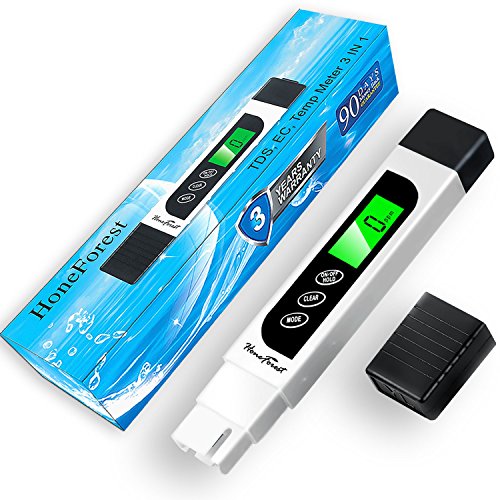
Myth: Clear, Odorless Water Is Clean Water
The senses are a reasonable detector for some things and no detector at all for others. Sediment, discoloration and a strong chlorinous smell are genuinely noticeable, and noticing them is useful. But several of the contaminants that drive testing decisions are colorless, odorless and tasteless at the concentrations that matter, which means a glass of water that looks and tastes perfectly ordinary tells you nothing about them either way.
This is why the sequence recommended throughout this site starts with a document and a test rather than with an impression. A sensory check is a reasonable prompt to investigate when something changes, and a poor basis for concluding that nothing needs investigating. Treating it as a screen is the version of this mistake that costs money, because it defers a cheap check indefinitely.
Myth: Letting the Tap Run Always Solves It
Flushing addresses one specific situation, which is water that has been sitting in contact with your own plumbing long enough to pick something up from it. Where that is the mechanism, running the tap genuinely changes what comes out. It is a reasonable habit and it is free.
What it does not do is change what the utility delivered to your property. If a substance is present in the supply itself, it is present in the flushed water too, and no amount of running the tap will alter that. Flushing is also a practice rather than a fix: it depends on somebody doing it correctly every time, including guests and children, which is why it is a reasonable interim step and a poor permanent answer.
Myth: A Filter Works Until It Stops Producing Water
Flow rate and filtration performance are not the same property, and they do not decline together. A cartridge whose capacity for a target substance has been used up can continue to pass water at an entirely normal rate, because what is exhausted is the medium’s ability to hold that substance rather than the physical path through the housing. Waiting for a noticeable drop in flow is therefore waiting for a signal that may never arrive.
The practical consequence is that replacement has to be driven by the manufacturer’s stated capacity and by your own usage, tracked deliberately, rather than by how the tap feels. A drop in flow does mean something, but what it usually means is that the sediment stage is loaded, which is a different component doing a different job from the one addressing your documented concern.
FAQ
Does boiling my tap water make it safe if there’s lead in it?
No — boiling doesn’t remove lead and can slightly concentrate it. Use appropriate NSF/ANSI 53-certified filtration for lead specifically instead[2].
If my water looks and tastes fine, do I still need to read the report?
Yes. Appearance and taste are informative about some things and silent about others, including several of the substances that most often prompt testing. Reading the report costs nothing and is the only way to know what your system actually detected.
Is water from a refrigerator dispenser already filtered?
Many refrigerators include a filter and many do not, and among those that do, what the filter is certified to reduce varies by model. The dispenser being there is not itself evidence of treatment. Check the appliance documentation for the specific filter and what claims it holds, and check when it was last changed.
Does running the tap make water containing lead safe to drink?
Flushing can reduce what has accumulated from contact with your own plumbing while water sat, which is a real effect but a partial one. It does not address anything present in the supply itself, and it depends on the routine being followed correctly every time by everyone in the household. Filtration certified for the specific concern is the durable answer.
Match your prevention approach to your actual documented concern and appropriate certification, not unverified general assumptions.
References
- 40 CFR 141.153 — Content of the reports. Electronic Code of Federal Regulations. Accessed 27 September 2026
- Consumer Tool for Identifying Point-of-Use and Pitcher Filters Certified to Reduce Lead in Drinking Water. U.S. Environmental Protection Agency. Accessed 27 September 2026
These statements have not been evaluated by the Food and Drug Administration. This information is not intended to diagnose, treat, cure, or prevent any disease. Content is for informational purposes only and is not medical advice; consult a qualified healthcare provider before starting any supplement. As an Amazon Associate we earn from qualifying purchases.
